RV air conditioner repair in Houston
Houston searches for RV AC repair start in March and peak in June and July. In a humid 95° afternoon a rooftop unit runs nonstop, and small problems show up quickly.
Techs drive to you: an RV park, a storage lot or your own driveway.
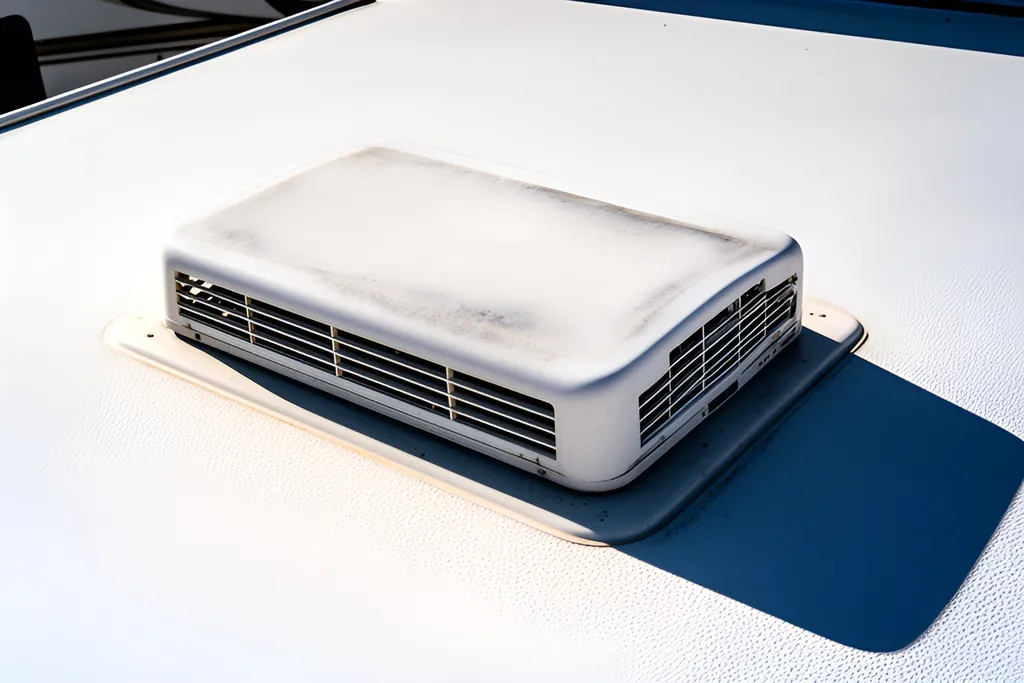
Signs the AC needs work
- Runs all day, never catches up
Some of this is normal in July. If it can't pull the coach below the low 80s by evening, look at the coils, the filter and the capacitor.
- Trips the breaker
Often low voltage at a busy park, a failing start capacitor or a compressor drawing too much current. Two ACs on a 30-amp site will trip it too.
- Hums but the compressor won't start
Typical of a weak capacitor or low pedestal voltage. Repeated attempts heat the compressor, so switch it off and call.
- Water on the ceiling
Humid air makes a lot of condensate. A clogged drain or a tired roof gasket sends it inside.
Check these first
- Return filterPull the ceiling grille and look at the foam. Dust and lint choke airflow; rinse it, dry it, put it back.
- Pedestal voltageRead the voltage at the post on a hot afternoon. Our electrical page tells you what the number means.
- One AC at a timeOn a 30-amp site, run one AC and keep the microwave and water heater element off while it starts.
- Thermostat and modeCool, not Fan; setpoint well under room temperature; the 12-volt house battery charged so the thermostat has power.
- ShadeAn awning on the sunny side and reflective window covers take real load off the roof unit.

What a tech checks on the roof
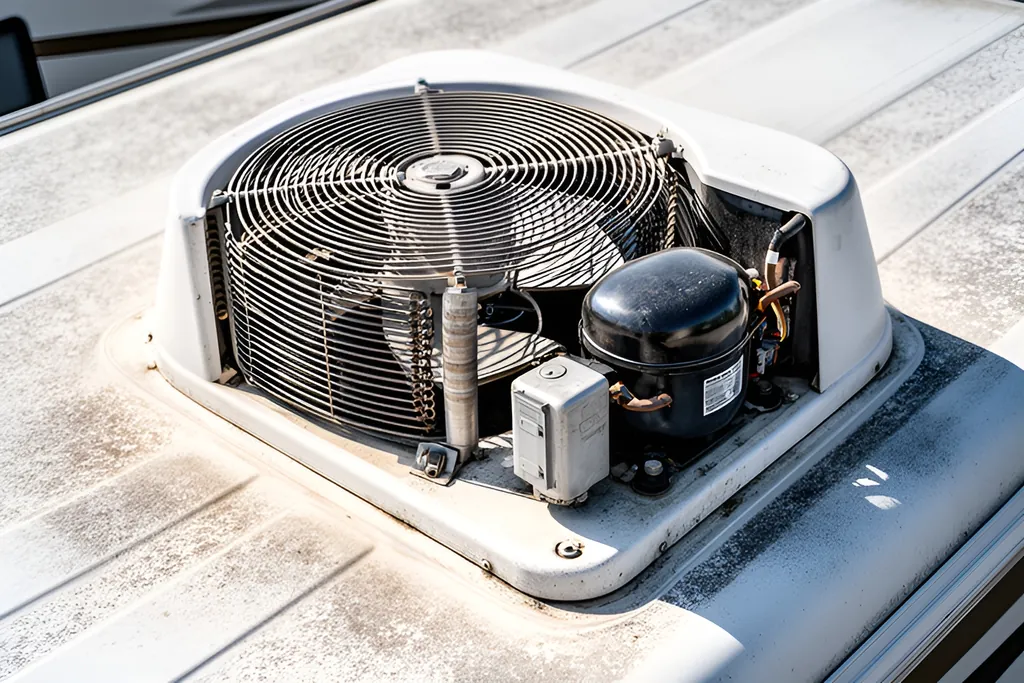
Voltage first: at the pedestal and at the unit, with the compressor starting. Then the start and run capacitors, the fan motor and the current the compressor draws.
With the shroud off they clean the condenser coil, which Houston pollen and dust pack tight, clear the condensate drain and look at the gasket under the unit.
If the compressor struggles to start on park power or a generator, a soft-start module can help. A dead sealed system means a new rooftop unit.
What it costs
| Job | Usual range | Source |
|---|---|---|
| Capacitor replaced | $150–420 | Micro-Air, “How much does it cost to replace an RV AC unit”, June 2026 |
| Fan motor replaced | $200–600 | Micro-Air, “How much does it cost to replace an RV AC unit”, June 2026 |
| Common AC repairs | $150–1,200 | Camping World, “Mobile RV Repair Cost Guide”, July 2026 |
| New rooftop unit installed | $800–2,500+ | Micro-Air, “How much does it cost to replace an RV AC unit”, June 2026 |
Budget guide only, 2026 — your tech quotes the real price after looking at the RV.
National figures for 2026. Nobody publishes Houston-only RV AC prices that we could find. Expect a trip fee on top.
Prices checked November 2026.
AC questions from Houston owners
Why does my RV AC trip the breaker in the afternoon?
Park voltage often sags when every RV runs its AC. Low voltage raises the current a compressor draws, and the breaker trips. Check the voltage at the post; if it is fine, the capacitor or compressor is the next suspect.
Can I run two ACs on 30 amps?
Usually not together. Two rooftop units need more current than a 30-amp service gives, especially while starting. Our guide to 30-amp and 50-amp sites explains how to share the power.
How cold should the air from the vent be?
Dometic and Coleman both put a healthy unit at roughly 16–22°F cooler at the vent than at the return grille after about 15 minutes on high. In very humid air the difference sits at the lower end.
Ask for a mobile RV tech
Leave a phone number. A tech who can take the job will call you.