RV electrical repair: power, batteries and converters
Around Houston, people search for RV batteries, chargers and converters all year. Many electrical calls start outside the RV, at a park pedestal that can't keep up with summer demand.
Techs drive to you: an RV park, a storage lot or your own driveway.
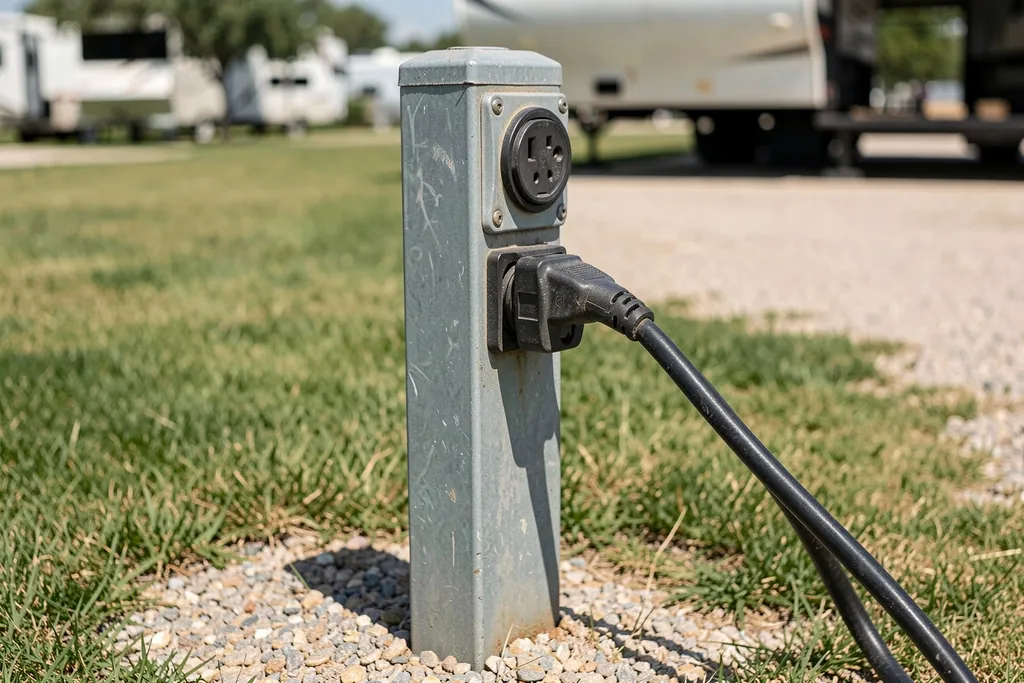
What is your pedestal voltage telling you?
Read the voltage at the pedestal with a plug-in meter, or on the display of your surge protector. Do it on a hot afternoon, when the park is busiest, and type the number here.
Equipment built for 120 volts has a tolerance of about 10% either way: roughly 108 to 132 volts. Energy management systems from Progressive Industries cut power to the RV below 104 volts or above 132 volts.
Sources: Family RVing Magazine (Family Motor Coach Association) on voltage tolerance; Progressive Industries EMS specifications.
Electrical trouble owners describe
- Batteries flat every morning
Something draws power overnight, the converter isn't charging, or the batteries are worn out. Heat shortens battery life.
- Lights dim when the AC starts
A sign of low incoming voltage or a loose connection at the plug, the pedestal or the transfer switch.
- Outlets dead, 12-volt fine
A tripped breaker or GFCI outlet, a failed transfer switch, or no power from the pedestal.
- Burnt smell or a hot plug
A worn or loose shore power plug overheats. Unplug at the pedestal breaker and get it checked before using it again.
Safe things to check
- GFCI outletsFind the outlets with test and reset buttons — often in the bathroom or kitchen — and press reset.
- Battery disconnectMany RVs have a battery switch near the door. Make sure it is on.
- TerminalsLook for white or green crust on battery terminals. Corrosion blocks charging.
- Plug and cordLook at the shore power plug for browned or melted pins. Don't use a cord that looks scorched.
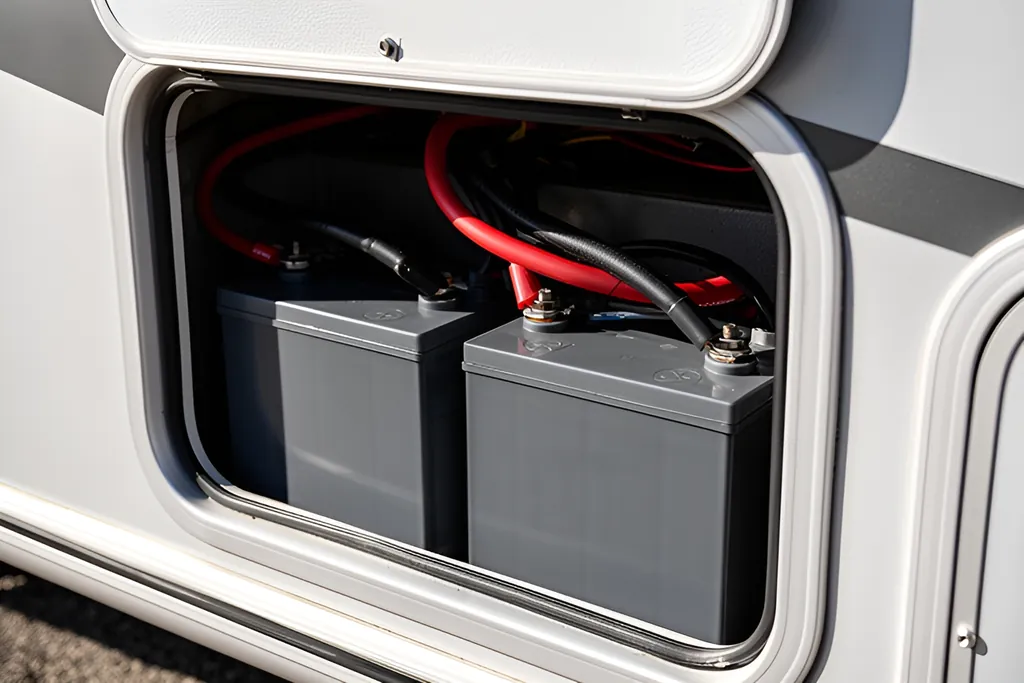
What a tech tests
The tech measures voltage at the pedestal, the plug and the panel, checks the transfer switch and the converter's charging output, and load-tests each battery.
Common fixes are a new converter, replaced batteries, a rebuilt shore power plug or a hard-wired energy management system that disconnects the RV when the park's power goes bad.
What it costs
| Job | Usual range | Source |
|---|---|---|
| Electrical repairs, from the base labor charge | up to $2,500+ | Camping World, “Mobile RV Repair Cost Guide”, July 2026 |
| Flooded deep-cycle battery (part) | $100–150 | UDPower, “RV Battery Replacement Guide”, September 2026 |
| 100Ah AGM battery (part) | $175–310 | UDPower, “RV Battery Replacement Guide”, September 2026 |
| 100Ah lithium battery (part) | $300–800+ | UDPower, “RV Battery Replacement Guide”, September 2026 |
Budget guide only, 2026 — your tech quotes the real price after looking at the RV.
Battery prices are for one battery, before installation. A lithium upgrade may also need a compatible converter or charger.
Prices checked November 2026.
Electrical questions
Is a surge protector enough?
A basic one only stops spikes. Low voltage — the more common Houston summer problem — needs a unit that also cuts power when voltage drops, usually sold as an energy management system.
Why do my batteries die in storage?
Small loads like detectors and clocks drain them. Use the battery disconnect, or keep the RV plugged in with a charger that maintains rather than overcharges.
Can a mobile tech install lithium batteries?
Yes. Ask whether your converter, solar controller and alternator charging are compatible; the tech may need to replace one of them too.
Ask for a mobile RV tech
Leave a phone number. A tech who can take the job will call you.